Author: admin

Salicylic Acid Treatment For Acne

“Be Acne Free with Elara”

Achieving clear and radiant skin is a universal desire, and for many individuals dealing with acne, the journey towards a blemish-free complexion can be challenging. In the realm of skincare, one ingredient has emerged as a powerhouse in the fight against acne i.e salicylic acid. This article delves into the benefits of using salicylic acid face wash and cleansers, shedding light on its effectiveness in tackling acne-related issues.

Understanding Acne

Acne, a common skin condition, occurs when hair follicles become clogged with oil and dead skin cells, leading to the formation of pimples. Factors such as hormonal changes, genetics, and environmental influences contribute to the development of acne. To address this concern effectively, a targeted skincare routine is essential.

What is Salicylic Acid?

Salicylic acid is an organic marvel concealed within the bark of specific plants, notably the formidable willow tree. Esteemed across centuries for its robust anti-inflammatory and pain-alleviating characteristics, it notably laid the foundation for aspirin. Jump to the present, and you’ll encounter this adaptable compound in numerous skincare solutions, addressing a range of concerns from acne to the indications of aging.

The Role of Salicylic Acid

Salicylic acid, a beta-hydroxy acid (BHA), is renowned for its ability to penetrate deep into the pores, making it a valuable ally in the battle against acne. Unlike alpha-hydroxy acids, which are water-soluble, salicylic acid is oil-soluble, allowing it to dissolve excess oil and exfoliate dead skin cells within the pores. This unique property makes salicylic acid particularly effective in preventing and treating acne breakouts.

The Benefits of Salicylic Acid Face Wash:

Unclogs Pores: Salicylic acid exfoliates the skin’s surface and penetrates into pores, dissolving excess sebum and dead skin cells. This helps prevent clogged pores, a leading cause of acne.

Acne Treatment: Its anti-inflammatory properties make salicylic acid particularly effective in treating acne. By reducing inflammation and redness, it contributes to a clearer complexion over time.

Exfoliation without Irritation: Unlike some harsh physical exfoliants, salicylic acid provides gentle exfoliation, making it suitable for various skin types.

Blackhead Removal: Salicylic acid’s ability to penetrate oil makes it highly effective in treating and preventing blackheads, resulting in smoother, clearer skin.

Salicylic Acid Face Wash: A Game-Changer

The cornerstone of a successful skincare routine for acne-prone skin is a reliable face wash. Salicylic acid face washes are formulated to deliver a concentrated dose of this potent ingredient directly to the skin. When used regularly, these facewash help to unclog pores, reduce inflammation, and promote the shedding of dead skin cells, preventing the formation of new blemishes.

Cleansers with Salicylic Acid: 

In addition to face washes, incorporating a cleanser with salicylic acid into your skincare routine can provide a holistic approach to acne management. Cleansers containing salicylic acid work by gently exfoliating the skin’s surface, promoting cell turnover, and preventing the accumulation of debris that can lead to breakouts. Moreover, these cleansers help in maintaining clear skin over the long term, making them an essential component of an acne-fighting regimen.

Incorporating Salicylic Acid into Your Routine:

Start Slow: Introduce salicylic acid gradually into your routine, using it a few times a week initially. This allows your skin to adjust without causing irritation.

Follow with Moisturizer and Sunscreen: Salicylic acid may mildly dry the skin, so it’s crucial to follow up with a moisturizer. Additionally, always use sunscreen during the day to protect your skin from UV damage.

Choosing the Right Product

When selecting a salicylic acid face wash or cleanser, it is crucial to consider the product’s concentration, your skin type, and any potential sensitivities. Start with a lower concentration and gradually increase as your skin builds tolerance. Always patch-test new products to avoid adverse reactions, and consult with a dermatologist if you have concerns about your specific skin condition.

Opt for the Right Concentration: Salicylic acid is available in various concentrations. Beginners may start with a lower concentration, such as 0.5% to 2%, and gradually increase as their skin builds tolerance.

Consider Your Skin Type: While salicylic acid is generally well-tolerated, it’s essential to consider your skin type. Those with dry or sensitive skin may benefit from a milder formulation, while oilier skin types can opt for stronger concentrations.

Look for Complementary Ingredients: Many salicylic acid cleansers contain additional beneficial ingredients, such as niacinamide, antioxidants, or soothing agents. These can enhance the overall effectiveness of the product and provide added skincare benefits.

In the pursuit of clear and healthy skin, incorporating salicylic acid face washes and cleansers into your daily routine can be a game-changer. These products offer a targeted approach to acne management, addressing the root causes of breakouts and promoting overall skin health. With consistent use and proper care, the power of salicylic acid can unlock the path to a radiant and blemish-free complexion.

Understanding Acne And It’s Treatment

Sometimes, growing up comes with unexpected challenges, and one common hurdle for many kids and teenagers is acne. This article is here to help you, whether you’re a young reader curious about your skin or an adult guiding a child through this phase. Let’s embark on a journey to understand acne, its causes, and effective ways to prevent and treat it.

What is Acne?

Acne is a prevalent skin condition experienced by kids and teenagers as they go through adolescence. It often manifests as small, red bumps on the face, neck, chest, and back. It’s crucial to recognize that you’re not alone – many kids encounter the same challenge. Acne can be attributed to various factors, including hormonal changes, genetics, stress, poor hygiene, and diet.

Types of Acne

Acne comes in various forms, from mild to severe. Identifying the type of acne is crucial in determining the most effective approach to treatment. Recognizing these different types is essential for effective treatment and management. Here are some common types of acne:

Blackheads:

Appearance: Bumps that look like dark or black spots on the skin.

Characteristics: Blackheads are open comedones, and the dark color is not dirt but rather oxidized melanin.

Cause: They result from the accumulation of oil and dead skin cells in the hair follicles.

Whiteheads:

Appearance: Small, closed bumps that appear as white or skin-colored.

Characteristics: Whiteheads are closed comedones, meaning the follicle opening is blocked, preventing oxidation of melanin.

Papules:

Appearance: Small, red, inflamed bumps on the skin.

Characteristics: Papules are often tender to the touch and do not contain pus. They result from inflammation and infection of the hair follicles.

Pustules:

Appearance: Raised or bulging bumps with a visible yellow pus-filled center.

Characteristics: Pustules are inflamed, red, and tender to the touch. The yellow or white center is a collection of dead white blood cells and bacteria.

Nodules:

Appearance: Large, painful, inflamed bumps that are firmly rooted in the skin.

Characteristics: Nodules are deeper and more severe than papules and pustules. They can be painful and may not come to a head easily.

Cysts:

Appearance: Painful bumps that are larger than pimples and filled with pus or fluid.

Characteristics: Cysts are the most severe form of acne. They can cause significant pain, swelling, and may lead to permanent skin damage. Cysts often extend deep into the skin layers.

Why Do Kids Get Acne?

Hormonal Changes: Puberty brings about hormonal changes that can increase oil production, leading to clogged pores and acne outbreaks.

Genetics: Your likelihood of experiencing acne may be influenced by your family history. If your parents or siblings had acne, you might be more prone to it.

Stress: Believe it or not, stress can contribute to acne. Hormones released during stressful times may increase oil production in the skin.

Poor Hygiene: Regularly washing your face is essential to prevent the accumulation of oil and grime, which can exacerbate acne.

Diet: While there’s no direct link between junk food and acne, a balanced diet with whole grains, vegetables, and fruits can contribute to healthier skin.

How Can You Prevent Acne?

Practice Good Hygiene Habits: Wash your face twice daily with a gentle cleanser and use oil-free, non-comedogenic moisturizers.

Drink Plenty of Water: Hydration is key to clear skin. Drinking water helps flush out toxins and promotes overall skin health.

Exercise Regularly: Physical activity improves blood circulation and contributes to healthy skin. Remember to shower after exercising to prevent pore-clogging sweat.

Eat a Healthy Diet: Opt for a balanced diet rich in whole foods to support skin health.

Avoid Touching Your Face: Resist the urge to touch your face frequently, as it can spread bacteria and worsen acne outbreaks.

How Can You Treat Acne?

Over-the-Counter Medications: Products with benzoyl peroxide or salicylic acid can unclog pores and reduce inflammation.

Prescription Medications: For severe acne, a doctor may prescribe topical or oral medications to control breakouts and prevent scarring.

Natural Remedies: Some natural ingredients like tea tree oil, aloe vera, and witch hazel can help with mild acne. Consult a doctor before trying any natural remedies.

Professional Treatments: Dermatologists offer treatments such as chemical peels, laser therapy, or extractions for stubborn or severe cases.          

Acne is a temporary challenge caused by hormonal changes during puberty. By practicing good hygiene, maintaining a healthy lifestyle, and seeking professional help when needed, you can manage and overcome acne. If acne affects your self-esteem or causes discomfort, don’t hesitate to consult a doctor or dermatologist. Remember, with patience and proper care, clearer and healthier skin is within reach. Focus on building good habits, taking care of your overall health, and seeking support when necessary. Your skin is just one part of who you are – your confidence and kindness matter more. Understanding acne is the first step toward managing it effectively, and you’re on the path to clearer days ahead.

Chemical Peel vs. Carbon Peel: What’s The Difference?

Skin concerns, such as acne breakouts, inflammation, and scarring, can be effectively addressed through various treatments like chemical peels and carbon peels. Both of these procedures offer remarkable benefits for skin rejuvenation, but they differ in their methods of achieving results and the amount of downtime they entail. In this article, we will explore the key differences between chemical peels and carbon peels to help you make an informed choice for your skincare needs.

Method of Achieving Results:

Chemical Peel: Chemical peels use a chemical formulation applied to the skin. The chemical reaction initiated by the peel helps exfoliate the skin, and stimulate skin rejuvenation. This process targets acne breakouts, fine lines, pigmentation, and other skin issues by promoting cellular turnover and collagen stimulation.

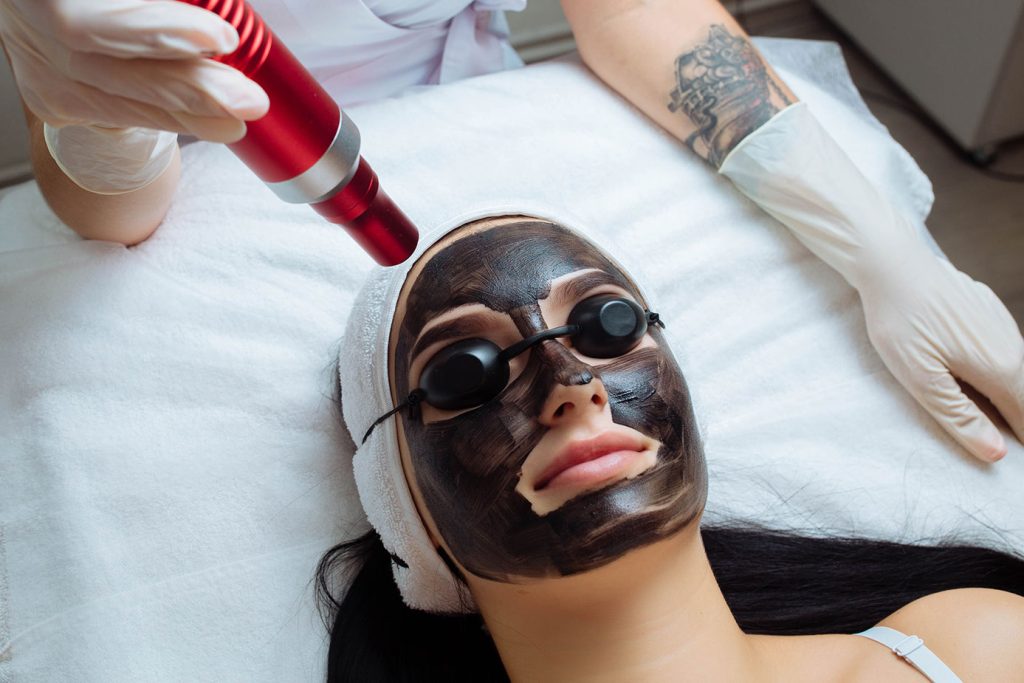
Carbon Laser Peel: Also known as the “Hollywood Peel,” a carbon laser peel involves the application of a carbon cream mask before the laser treatment. During the laser procedure, the carbon particles in the cream absorb impurities and are subsequently “exploded” by the laser, exfoliating the skin and removing the absorbed impurities. Additionally, the laser stimulates collagen production, reducing acne inflammation and lightening acne scars. The heat generated by the laser plays a crucial role in achieving results.

Suitability for Sensitive Skin: The carbon laser peel may be better suited for individuals with sensitive skin or prone to eczema due to its lower risk of chemical irritation.

Common Benefits of Both Peels:

Before diving into the differences between these two peels, it’s essential to understand that they share common benefits. Both chemical peels and carbon peels are effective in:

  • Reducing acne breakouts and inflammation
  • Controlling excess oil production
  • Minimizing pore size and unclogging pores
  • Lightening pigmentation and acne scars
  • Improving the appearance of fine lines and wrinkles
  • Exfoliating dead skin cells
  • Enhancing skin texture and tone

Key Differences:

Method of Achieving Results:

The fundamental difference between chemical peels and carbon peels lies in how they achieve similar results. Chemical peels rely on a chemical reaction with the skin to exfoliate and improve skin conditions. In contrast, carbon laser peels rejuvenate the skin primarily through the heat generated by the laser treatment. This variance in mechanisms can make a difference for individuals with specific skin types or conditions.

Chemical Peels: Those with sensitive skin may need to exercise caution when considering chemical peels, as the chemical reaction may lead to discomfort or sensitivity. It’s crucial to choose the appropriate type and strength of chemical peel based on your skin’s needs. It is always better to do chemical peel on a small area (as test peel) prior to the chemical peel application on entire face.

Carbon Laser Peels: The carbon laser peel’s mechanism is less likely to cause skin sensitivity and discomfort, making it a more suitable option for individuals with sensitive skin or those prone to skin conditions like eczema.

Amount of Downtime:

Chemical Peel: The amount of downtime after a chemical peel can vary depending on the strength of the peel. Some mild peels may have minimal to no downtime, while stronger peels may require a few days of recovery. Common side effects include redness, peeling, and mild discomfort.

Carbon Laser Peel: One of the significant advantages of the carbon laser peel is that it typically involves no downtime. You can resume your daily activities immediately after the treatment. Some individuals may experience minor facial redness, which can be easily concealed with makeup.

Both chemical peels and carbon laser peels offer effective solutions for addressing common skin concerns, such as acne breakouts, inflammation, and scarring. While they share several benefits, their methods of achieving results and downtime requirements distinguish them. The choice between these two treatments should be based on your specific skin type, needs, and preferences. Consulting a qualified dermatologist or skincare professional is essential to determining which option is best suited for you. For more information on our carbon laser peels or chemical peels, call us at 01-5970791

In summary, chemical peels primarily rely on chemical reactions to rejuvenate the skin, while carbon laser peels use laser technology with the added benefit of heat. Understanding the differences between these treatments will help you make an informed decision about your skincare journey.

How does The Chemical Peel Process Help Make Your Skin Smooth and Fine?

Chemical peels have become a popular and effective method for achieving smoother and finer skin. This dermatological procedure involves the application of a chemical solution to the skin, which causes it to exfoliate and eventually peel off. The result is a rejuvenated and revitalized complexion. In this article, we will explore the chemical peel process and how it can help you attain smoother and finer skin.

The Chemical Peel Process

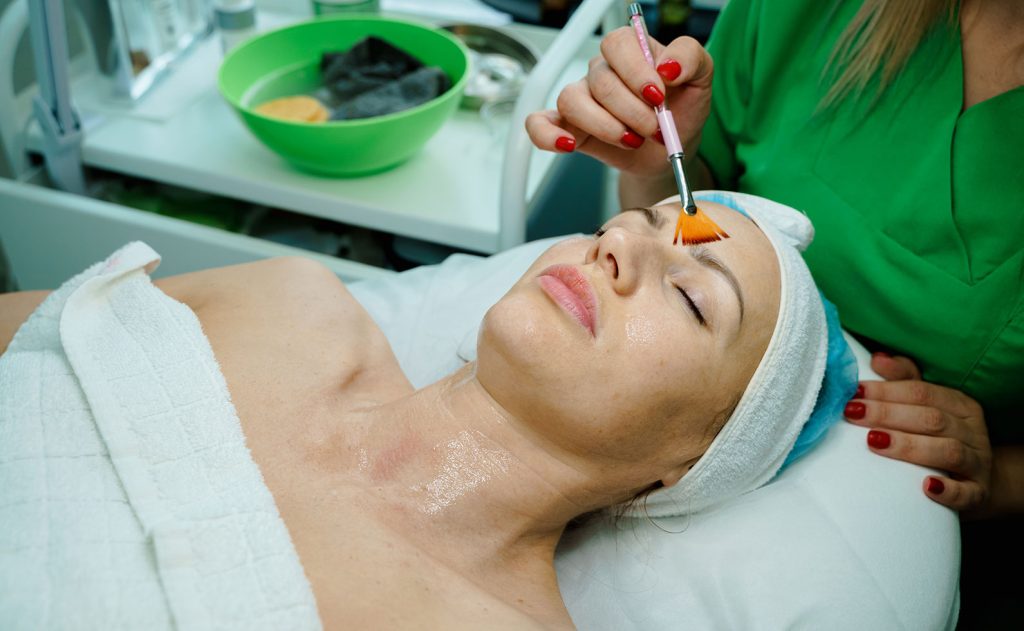
Preparation: Before undergoing a chemical peel, it’s crucial to consult with a qualified dermatologist or skincare professional. They will assess your skin type, concerns, and goals to determine the most suitable peel for you. There are different types of chemical peels, including superficial, medium, and deep peels, each catering to specific skin issues.

Cleansing: The process begins with cleansing the skin thoroughly to remove any makeup, dirt, and oil. This ensures that the chemical solution can penetrate the skin effectively.

Application of the Chemical Solution: The dermatologist will then apply the chosen chemical solution to your skin. The type and strength of the solution depend on your skin’s needs and the desired outcome. Superficial peels typically use milder acids like alpha hydroxy acids (AHAs) or beta hydroxy acids (BHAs), while medium and deep peels may use stronger acids like trichloroacetic acid (TCA) or phenol.

Reaction Phase: After the chemical solution is applied, you may experience a warm or tingling sensation. This is normal and indicates that the solution is working to exfoliate the top layers of your skin. The reaction time varies depending on the peel’s depth and your skin’s sensitivity.

Neutralization (for Medium and Deep Peels): Medium and deep peels require a neutralizing solution to stop the chemical reaction. This step is crucial in preventing the solution from penetrating too deeply into the skin.

Peeling: Over the next few days to a week, the treated skin will start to peel and shed. This is a natural part of the process as the old, damaged skin is sloughed off, revealing smoother, younger-looking skin underneath.

Post-Peel Care: It’s essential to follow your dermatologist’s post-peel instructions diligently. This may include using gentle skin care products, avoiding sun exposure, and applying sunscreen and moisturizer regularly to protect the newly exposed skin. Additionally, it is advisable to follow any other recommendations given by your doctor.

How Chemical Peels Improve Skin Texture

Now that we have outlined the chemical peel process, let’s delve into how it helps make your skin smooth and fine.

Exfoliation: The primary mechanism behind the effectiveness of chemical peels is exfoliation. By removing the outermost layer of dead skin cells, chemical peels reveal fresher, healthier skin beneath. This exfoliation process not only smoothens the skin but also helps unclog pores, reducing the risk of acne and blackheads.

Collagen Stimulation: Chemical peels can stimulate the production of collagen, a protein that gives skin its elasticity and youthful appearance. As we age, collagen production decreases, leading to sagging skin and wrinkles. By encouraging collagen synthesis, chemical peels can help firm and tighten the skin.

Fading Hyperpigmentation: Chemical peels are effective in fading various forms of hyperpigmentation, such as age spots, sunspots, and melasma. The exfoliation process removes the pigment-containing cells on the surface, and over time, the new skin that emerges is often more even-toned.

Acne Scar Reduction: Chemical peels can significantly improve the appearance of acne scars. They work by removing the damaged outer layers of skin and by stimulating collagen , which can make scars appear shallower and less noticeable. For deep acne scars, multiple sessions may be required.

Fine Line and Wrinkle Reduction: Chemical peels, especially medium and deep peels, can address fine lines and wrinkles. By removing the damaged skin layers and stimulating collagen production, they can help smoothen and plump the skin, reducing the appearance of lines and wrinkles.

Treatment Customization: One of the advantages of chemical peels is their versatility. They can be customized to target specific skin concerns and tailored to individual skin types, ensuring optimal results.

In conclusion, the chemical peel process is a highly effective method for achieving smoother and finer skin. By promoting exfoliation, stimulating collagen production, and addressing various skin issues, chemical peels can rejuvenate your complexion and restore a youthful glow. However, it’s essential to consult with a qualified skincare professional to determine the most suitable peel for your skin type and concerns. With proper care and maintenance, chemical peels can help you achieve the smooth and fine skin you desire.

Contest Alert! Are you festive-ready with “The Complete Hydrafacial?”

💫Contest Alert!💫

Share your “Complete Hydrafacial” experience at Elara Clinics with #FestiveReadyWithElara and #TheCompleteHydrafacial for a chance to Win Elara Clinics Voucher worth Rs.15000!

Experience the magic of “The Complete Hydrafacial” at Elara Clinics and shine this festive season! 💫

#FestiveSeason #ElaraClinics #SkinTreatment #GlowwithElara #Hydrafacial #HydrafacialLove

Terms and Conditions

  1. Participants to share their review on “The Complete Hydrafacial” in a video format and share in their story
  1. The participants to tag @ElaraClinics in the review and use the #FestiveReadyWithElara #TheCompleteHydrafacial
  1. If the participants’ account is on private, they are to share the screenshot of the review video and share the video in Elara Clinics PM or DM.
  1. The winners will win, Elara Clinics Voucher worth 15K, which can be redeemed with multiple service or sessions. The voucher is non-transferable and cannot be redeemed for cash.
  1. The winners will be selected randomly. The winner will be contacted via DM on Facebook or Instagram.
  1. In every 10 Entries, there will be one winner. This giveaway is valid for a limited time period only.
  1. Same entry will be eligible for the whole duration of the Giveaway.
  1. Multiple entries are allowed. The more entries, the better chances of winning.
  1. If all the criterias are not met, the participant will not be eligible for the giveaway.

Laser Hair Removal vs. Waxing

In today’s hectic schedule, time is of the essence, and people always opt for solutions that provide them with efficient and quick remedies for their queries. And when it comes to hair removal procedures, there are various methods that one can choose from. Amidst many popular methods, the two that stand out the most are Laser Hair Removal and Waxing. However, they each have their own set of benefits and drawbacks, and choosing which procedure to follow can be a daunting task that ultimately comes down to personal preference and specific needs. 

In this post, we’ll look at the distinctions between laser hair removal and waxing, so you can make an informed decision about which treatment is best for you. We will be dissecting the main factors related to Waxing and Laser Hair Removal into cost, effectiveness, pain levels, longevity, and offering insights based on scientific research. 

Firstly, let us understand the basics of how laser hair removal and waxing work. 

How do Laser Hair Removal and Waxing Work?

Most hair removal methods remove hair just from the surface. However, laser hair removal eliminates them by killing them at the root. The skin is subjected to laser light pulses that target and remove hair follicles during this procedure. This procedure also reduces the capacity of the hair to regrow. Laser Hair Removal process needs to be repeated several times for the hair follicle to be destroyed. 

Meanwhile, Waxing is the process of putting wax on the skin and then removing it with the hair from the root. This leaves the skin smooth for a few weeks, but the hair will ultimately come back.

So here, waxing only removes hair temporarily and from the root, while laser hair removal destroys the hair follicle, resulting in a more long-term solution.

Moving on to the second factor determining which method is better between Laser Hair Removal and Waxing.

Which is more expensive, Laser Hair Removal or Waxing?

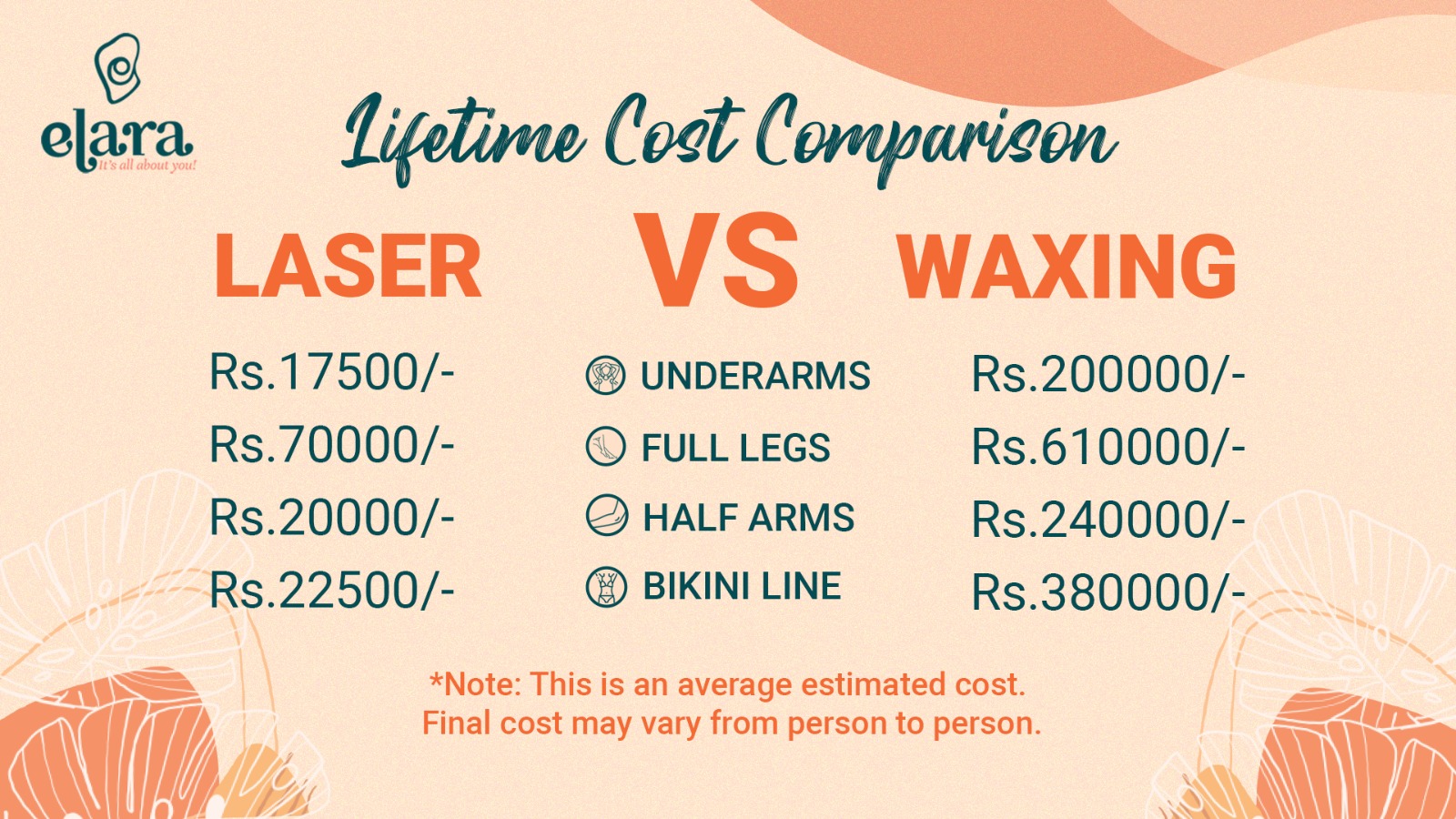
To be honest, laser hair removal is normally more expensive than waxing, but it becomes more cost-effective over time.

The initial cost of laser hair removal is substantially more than that of waxing, and the total cost quickly mounts up if numerous sessions are required. Laser hair removal costs vary based on the size of the region being treated, the number of sessions necessary, and the location of the treatment center.

While Waxing, is relatively cheaper than laser hair removal, Waxing prices vary based on the body area being waxed, the type of wax used, and the location of the salon. However, while laser hair removal is initially more expensive than waxing, it becomes more cost-effective in the long run. 

This is due to the fact that laser hair removal gives permanent hair reduction, whereas waxing provides only transitory benefits that require frequent maintenance.

So, while laser hair removal may cost more upfront, it may save you money in the long run by eliminating the need for monthly waxing treatments.

The third factor to be considered while comparing these two methods is the time constraint.

Which procedure is quicker?

Let’s face it: Time is money when it comes to hair removal, and no one wants to spend more time than necessary on hair removal. 

So, which option is faster: laser hair removal or waxing?

Waxing is a reasonably rapid form of hair removal, taking anywhere from 15 to 45 minutes, depending on the size of the region to be treated. However, you must give time for the hair to grow out before the next treatment, which is generally 3-6 weeks. 

On the other hand, Laser Hair Removal can take a little longer, with each session taking anywhere from 15 minutes to an hour, depending on the size of the region being treated. The number of sessions necessary, however, varies from person to person, and it normally takes 6-8 sessions over the course of 4 to 8 weeks to attain the desired outcomes. This means that Laser Hair Removal demands a significantly greater time commitment than waxing.  

But when the long-term benefits of laser hair removal are considered, it’s worth the time commitment. Waxing requires regular treatments every few weeks to maintain smooth skin. Once you’ve finished the necessary sessions for laser hair removal, you may experience permanent hair reduction, which means you won’t have to bother about hair removal as regularly.

The fourth factor is the precision or effectiveness of the procedure.

Which method is more precise?

While waxing is effective for hair removal, it is difficult to attain accurate results, especially when removing hair from more delicate places.

Laser hair removal, on the other hand, is extremely accurate, making it excellent for hair removal from smaller and more delicate places.

Waxing eliminates hair from the root, resulting in smooth, hair-free skin. However, achieving accurate results becomes difficult, especially when removing hair from smaller or more delicate locations. Waxing also causes irritation, redness, and ingrown hairs, which are both painful and ugly. 

Laser hair removal, on the other hand, is a very accurate type of hair removal that targets individual hair follicles while leaving surrounding skin unaffected. Laser hair removal is perfect for eliminating hair from smaller, more delicate regions, such as the face and bikini line, due to its accuracy.

Furthermore, laser hair removal addresses ingrown hairs well, lowering their frequency and severity.

Heading towards the fifth and final factor, i.e., Pain and Discomfort, while going through each of these procedures.

Does either of the procedures hurt?

While comparing both procedures on pain threshold, Waxing is definitely more painful than laser hair removal. The waxing procedure is done by applying wax to the skin and then quickly ripping it off, pulling the hair out from the root in the process.

Yes, that sounds painful and is painful as well. After following through with this procedure, the skin develops redness, irritation, and even bleeding in some cases. And let’s not get started on the pain in more sensitive areas. 

After hearing all those painful details about the waxing, Laser hair removal pain won’t seem so painful. The process of laser hair removal is typically less painful. The process is achieved when the laser emits a pulse of light that targets the hair follicle, causing a mild stinging or snapping sensation. So, it’s basically equivalent to flicking a rubber band on your arm, which is way more comfortable than waxing or epilating.

Sure, it’s not fun, but it’s much more tolerable than the pain of waxing. Furthermore, laser hair removal produces less discomfort and redness, so you’ll feel like a smooth operator rather than a hurting one.

So, if you’re tired of anticipating the pain to take hold while waxing, give laser hair removal a try.

Conclusion

So, after going through all the factors determining which method of hair removal is more efficient, there is no doubt that the clear winner in most of the categories is laser hair removal.

It’s more exact, takes less time, and is less unpleasant than waxing. And, while it may be more expensive up front, it can save you money in the long term by removing the need for regular waxing treatments.

If you’re thinking about getting laser hair removal, do your homework and pick a trustworthy facility with trained experts.